
My oral exam is next Thursday. Plant biology, twenty minutes, two examiners, no notes on the table. I have reread the photosynthesis chapter so many times that I can see the diagram with my eyes shut, and I still went blank when my flatmate asked me over pasta what the light-dependent reactions actually make.
That is the whole problem with oral exams. Knowing a thing and saying a thing are two different skills, and rereading only trains the first one.
What I wanted was easy to describe and oddly hard to find. Something that asks me one question, waits, listens to my answer, tells me what I missed, then asks the next one. Out loud, so I am practising talking rather than reading. And without making yet another account, because I have three exams in two weeks and roughly one free evening.
The obvious ones first
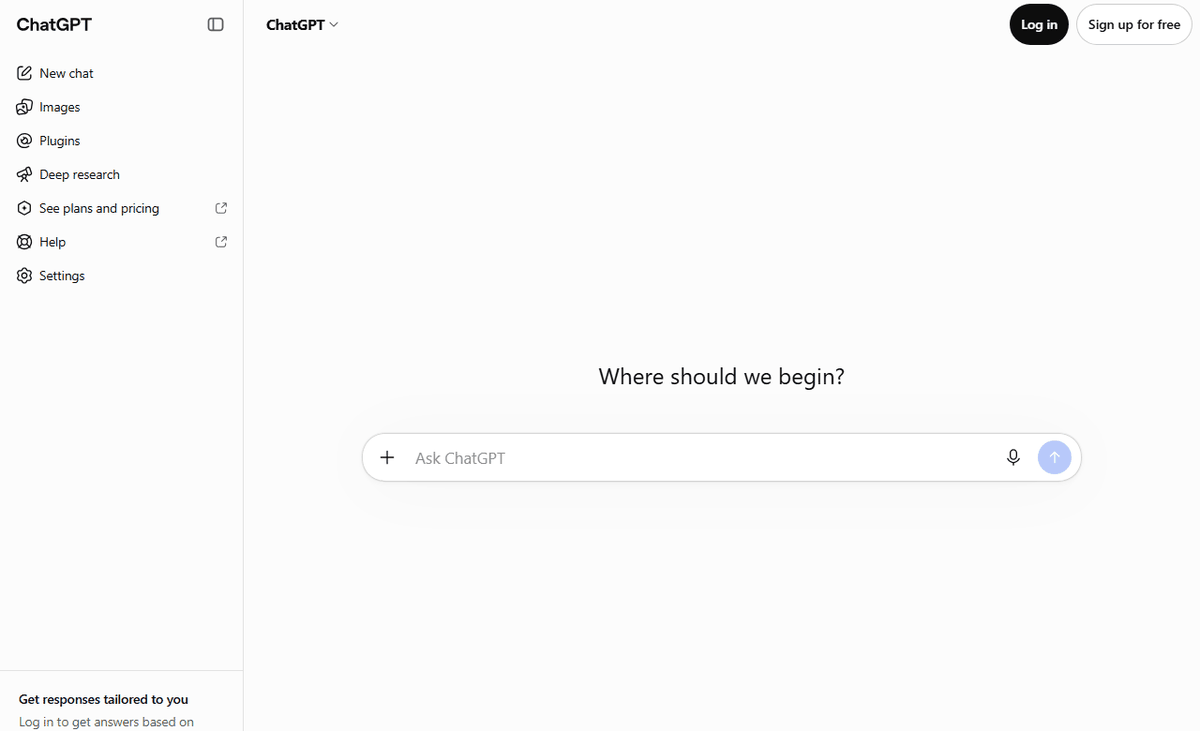
ChatGPT was where I started, because it is where everyone starts. Without logging in you get a chat box with a small microphone icon in the corner. That microphone takes dictation: it types what you say, and the answer comes back as text. Fine for a written quiz. It is not a conversation, and the talk-back voice mode my friends use on their phones is behind the login. I also got a cookie banner on the first visit and a “verify you are human” box on the second, which is not what you want at eleven at night.
ChatGPT without an account. The mic on the box types for you; nothing here talks back.
Gemini is similar. The page opens without an account, the box has the same kind of dictation mic, and the sidebar says sign in to save activity. The spoken back-and-forth mode needs a Google account, and I did not want exam practice mixed into the account that also holds my email.
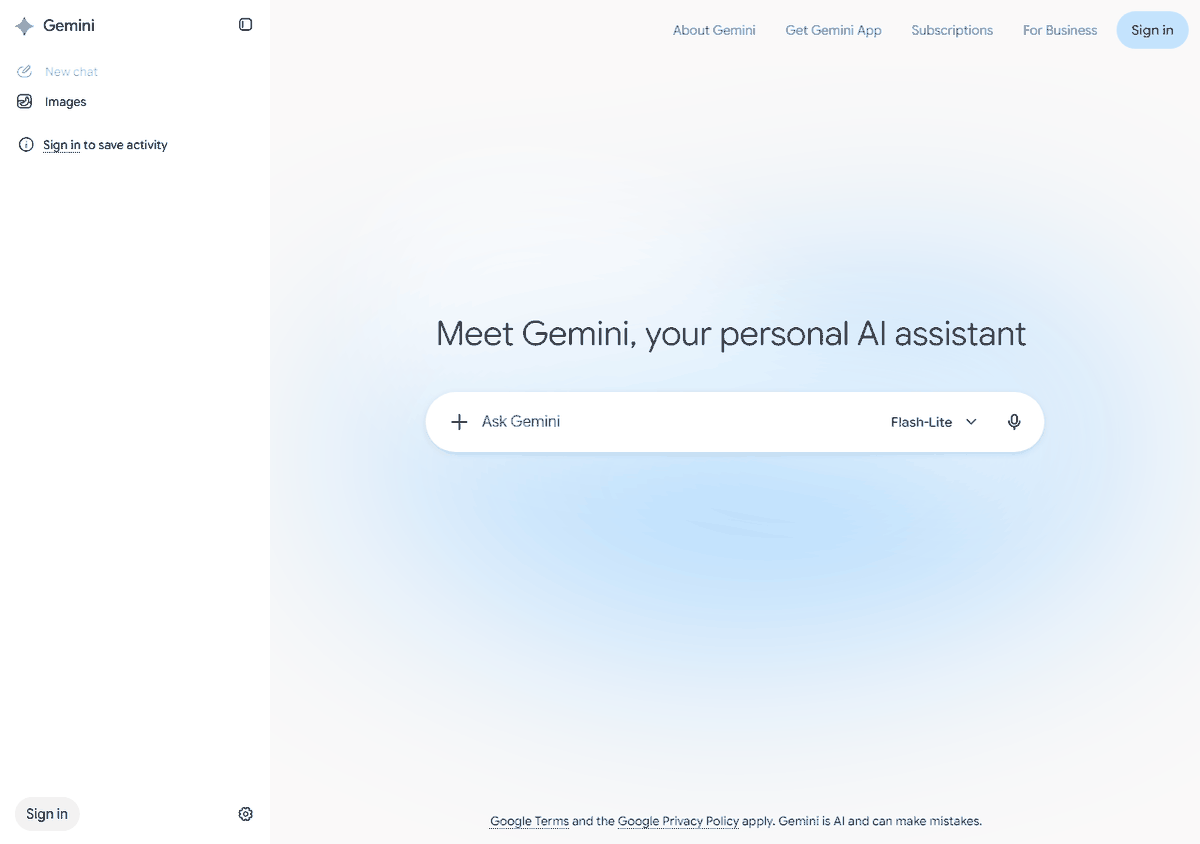
Gemini without an account. Dictation on the box, sign in everywhere else.
Copilot did not even show me a box. I landed on a sign-in page which says, in its own words, that Copilot is free with a signed-in Microsoft account. If your university handed you a Microsoft login, that is a door you can probably open. As a plain visitor there is nothing to talk to.
Then I tried TalkPal, because a friend doing languages swears by it. It is an AI tutor built for speaking practice, and from what she shows me it is good at the thing it is built for. But the Get started button leads straight into a sign-up flow, and the first screen asks which language you want to learn. If your oral exam is in French, that is a fair pick. For a biology oral in English it is the wrong shape of tool.
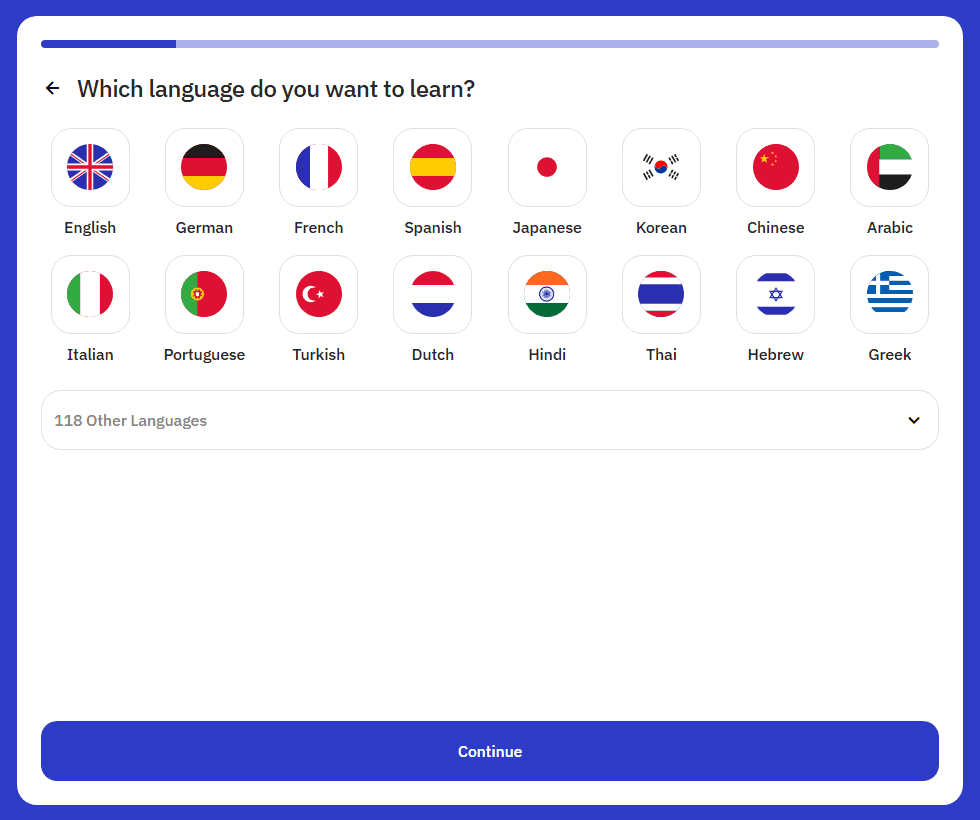
TalkPal’s first screen after Get started. You pick a language before you pick anything else.
Here is the short version of those two evenings:
| Tool | Starts without an account | Talks back out loud without an account |
| ChatGPT | Yes, text only | No, dictation mic only |
| Gemini | Yes, text only | No, dictation mic only |
| Copilot | No, sign-in page | No |
| TalkPal | No, sign-up first | After sign-up, for language practice |
| rewind.ai voice chat | Yes | Yes |
The second evening
The thing I kept coming back to was the ai voice chat on rewind.ai, mostly because it does what I described and nothing gets in the way. You open the page and there is a big microphone button with a line under it: tap it, speak naturally, and the AI answers when you pause. No sign-up box. There is a plain text field underneath for when you would rather type, and a voice settings panel where you pick the voice it answers in.
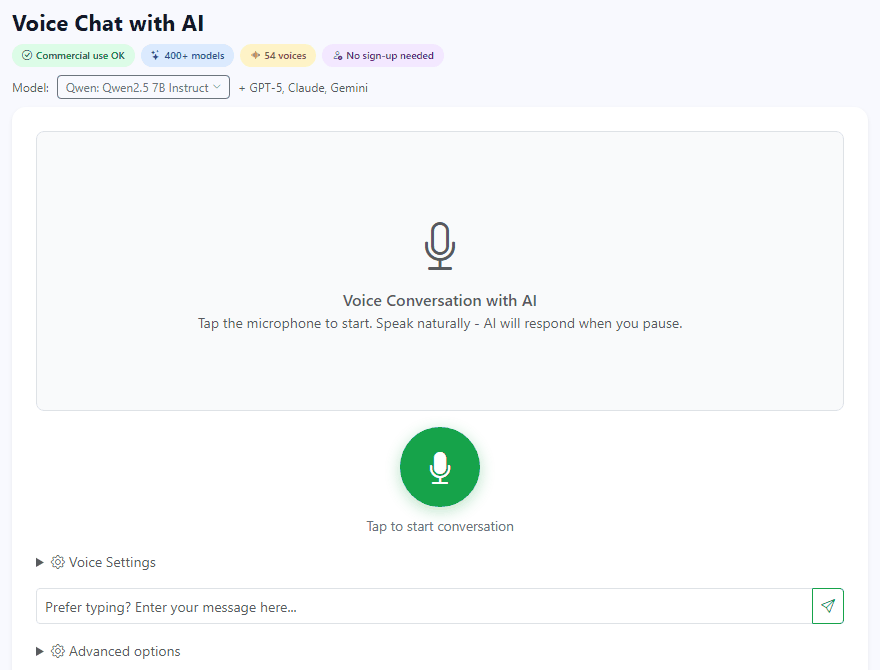
What a visitor sees. Tap the mic and talk, or type in the field under it.
The first time I used it I was in the library, so I typed. I told it I had an oral exam on photosynthesis tomorrow (a small lie, to make it take me seriously) and asked it to quiz me one question at a time and tell me whether each answer was good.
It asked what photosynthesis is and what its main products are. I answered the way I would to an examiner: plants use sunlight to turn carbon dioxide and water into sugar and oxygen, and it happens in the chloroplasts. It said the answer was accurate and covered the key points, then nudged me: say glucose rather than sugar, because it is more precise. Then the speaker button lit up and it read that feedback to me, with a tap to interrupt note underneath.
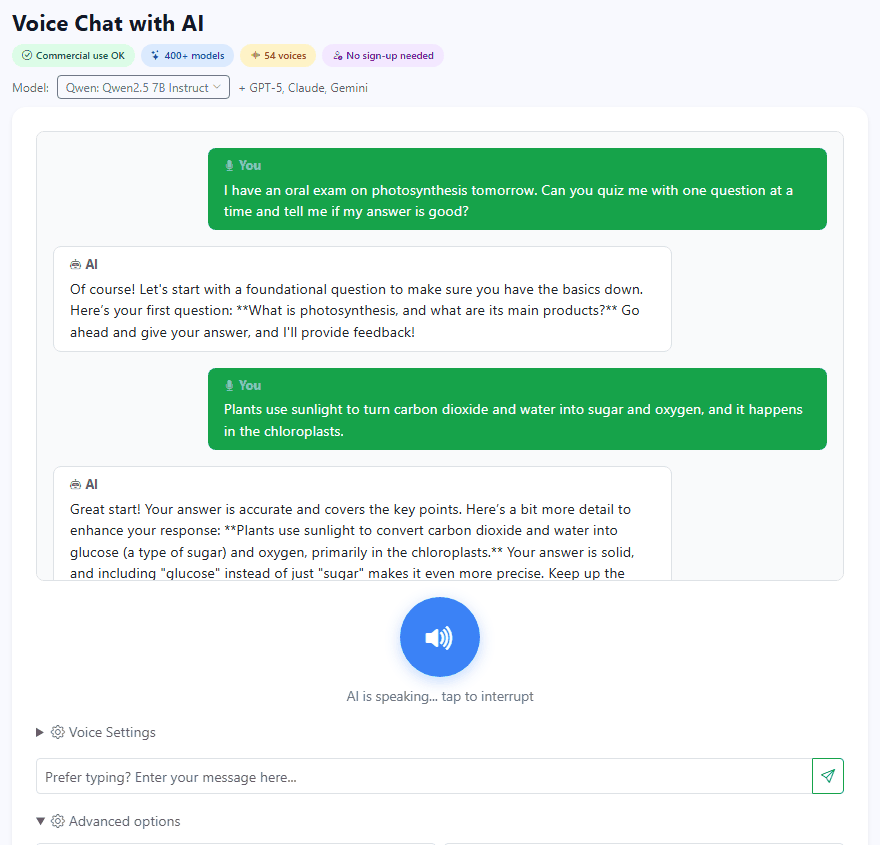
The typed run. One question, my answer, its feedback, and the speaker icon while it reads the feedback back.
That glucose correction is exactly the kind of thing an examiner notices and a notes app never will. At home, with the mic, the loop is the same but you are the one talking, which is the point.
How I set up a session now
The first message does most of the work. Mine goes something like this: you are my examiner for the plant biology module, ask one question at a time, wait for my answer, tell me what was missing or wrong, then ask a harder one on the same topic. Say that before anything else and the AI stops being a chatbot and starts being a viva.
A few more things I learned by getting it wrong first:
- Paste in the topic list from the module handbook. Otherwise it asks what it finds interesting, which is not the same as what your lecturer finds interesting.
- Ask for follow-ups the way a real examiner does: why, give an example, what would happen if. Those are the questions I freeze on, so those are the ones I want practice with.
- Tell it not to give you the answer until you have tried. Left alone it is kind, and kind is not useful the week before.
- Answer out loud even when typing is an option. Stand up. Finish the sentence. Half-answers in your head feel complete and are not.
- When it corrects you, say the corrected version back straight away, out loud. That is the rep that sticks.
- Check anything that surprises you against your notes. Any AI can be confidently wrong, and a grade is not the place to find out.
One session like this takes less time than rereading the chapter, and I can tell you which of the two I remember the next morning.
The night before
Do not open new topics. Ask for a short round on the three things you dread most, answer them out loud, take the corrections, say them back, and stop. Then sleep. I know people who stay up quizzing themselves until two in the morning and walk in with the vocabulary of a sleep-deprived toddler. The AI will still be there if you want a warm-up over breakfast.
Thursday, then. If the examiners ask about the light-dependent reactions, I now have an answer that comes out of my mouth rather than just sitting in my head, and I have said the word glucose so many times this week that my flatmate has banned it at dinner.