
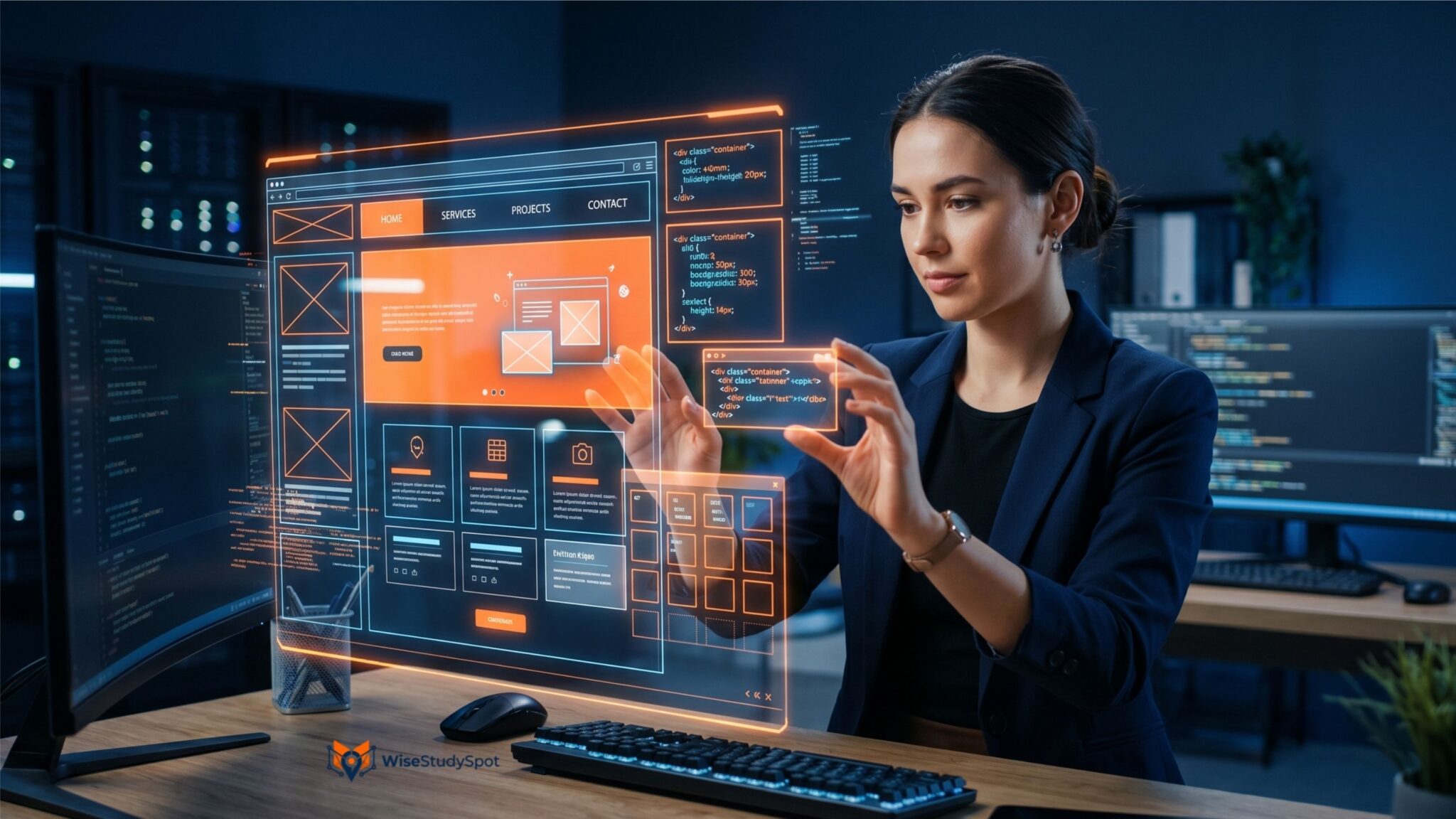
The web development landscape is experiencing a paradigm shift. In 2026, the traditional process of wireframing, mocking up designs, and manually coding responsive layouts is being rapidly accelerated. The catalyst for this change is AI-powered web design. For digital agencies operating in competitive environments like the United States and Australia, adopting these intelligent systems is no longer a futuristic luxury; it is a fundamental requirement to meet client demands for speed and quality.
From Wireframe to Fully Coded Layouts in Seconds
One of the most significant breakthroughs in AI-powered web design is the ability to convert simple text prompts or basic sketches directly into functional code. Designers can now describe the visual aesthetics and user experience they want, and generative AI models instantly output the corresponding HTML, CSS, and JavaScript. This eliminates the tedious process of translating visual concepts into syntax, allowing developers to focus purely on logic and user flow optimization.
Dynamic Personalization for Global Audiences
Websites built in 2026 are no longer static digital brochures. AI-powered web design enables hyper-personalization at scale. These intelligent platforms can analyze a visitor’s location, browsing behavior, and search intent in real-time. For example, a site can automatically adjust its layout, messaging, and call-to-action buttons depending on whether the user is accessing it from Sydney or New York. This level of dynamic adaptation dramatically increases conversion rates and user engagement.
Automating Technical SEO and Accessibility
Creating a beautiful website is only half the battle; it must also be discoverable and accessible. Modern AI design tools automatically generate perfectly structured JSON-LD schema markup, optimize image rendering for faster Core Web Vitals, and ensure that the entire site layout complies with strict international accessibility standards. By baking technical SEO directly into the design phase, websites rank faster and perform better on search engine results pages.
The Changing Role of the Web Developer
With AI handling the repetitive coding tasks, the role of the web developer is evolving into that of a technical director. Professionals now spend their time curating AI outputs, refining complex backend integrations, and strategizing the overall digital architecture. The human element remains absolutely critical for ensuring brand voice consistency and maintaining high-level creative direction.
Conclusion
AI-powered web design is revolutionizing how we conceptualize and build the internet. By embracing these generative tools, digital professionals can deliver highly personalized, lightning-fast, and SEO-optimized websites at an unprecedented scale. Integrating AI into your development workflow is the definitive path forward in the competitive digital landscape of 2026.